Characterization, Analytical Planning, and Hybrid Force Control for the Inspire RH56DFX Hand
University of Colorado Boulder
Commercially accessible dexterous robot hands are increasingly prevalent, but many remain difficult to use as scientific instruments. For example, the Inspire RH56DFX hand exposes only uncalibrated proprioceptive information and shows unreliable contact behavior at high speed (up to +1618% force limit overshoot). Furthermore, its underactuated, coupled finger linkages make antipodal grasps non-trivial. We contribute three improvements to the Inspire RH56DFX to transform it from a black-box device to a research tool: (1) hardware characterization (force calibration, latency, and overshoot), (2) a sim2real validated MuJoCo model for analytical width-to-grasp planning, and (3) a hybrid, closed-loop speed-force grasp controller. We validate these components on peg-in-hole insertion, achieving 65% success and outperforming a wrist-force-only baseline of 10% and on 300 grasps across 15 physically diverse objects, achieving 87% success and outperforming plan-free grasps and learned grasps. Our approach is modular, designed for compatibility with external object detectors and vision-language models for width & force estimation and high-level planning, and provides an interpretable, immediately deployable, and open-source (upon publishing) interface for dexterous manipulation with the Inspire RH56DFX hand.

YCB and YCB-like Objects
 Big Screwdriver
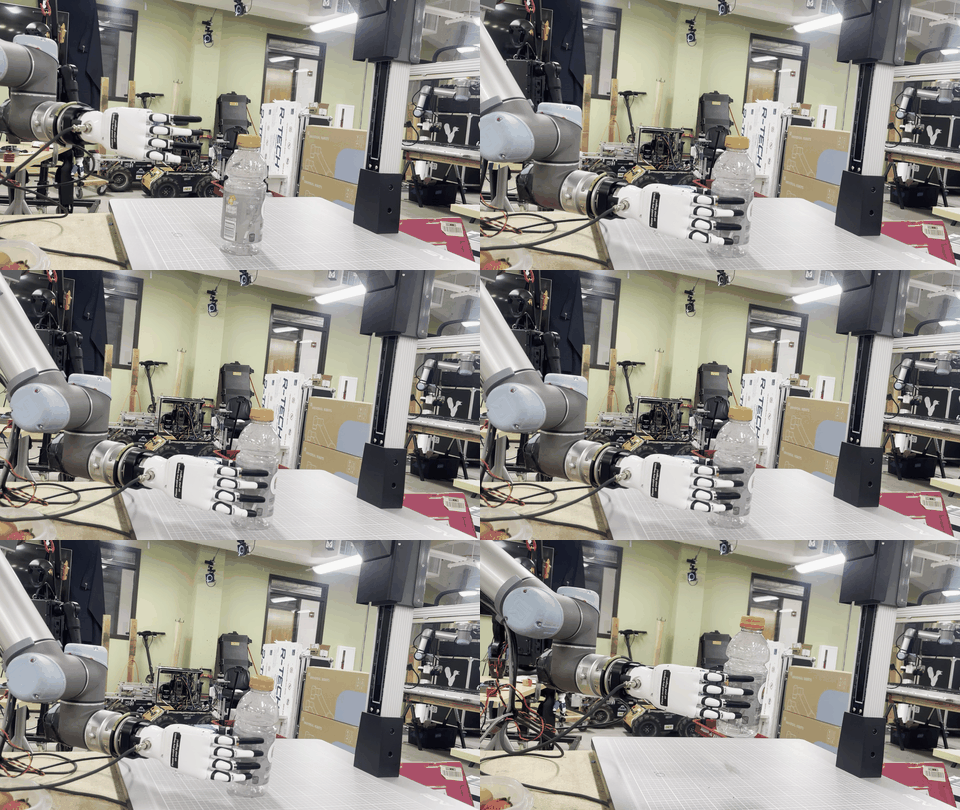 Bottle
 Can
Can
 Charger
 Metal Cup
 Mustard
 Orange
 Pen
Pen
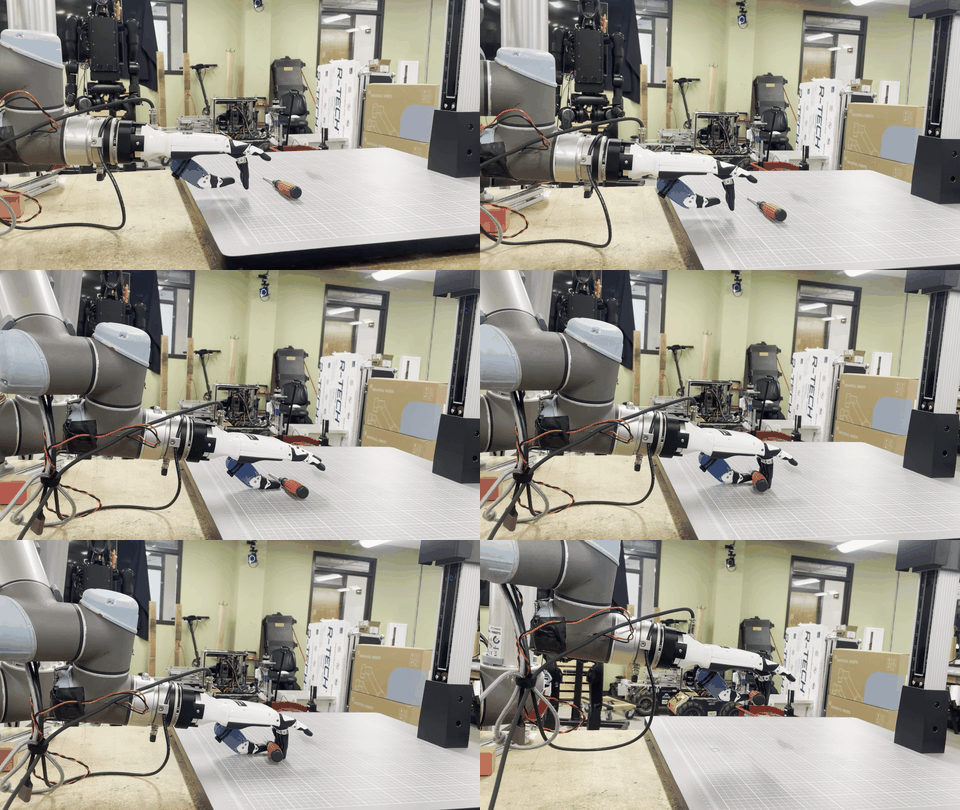 Small Screwdriver
 Sugar Box
Delicate Objects
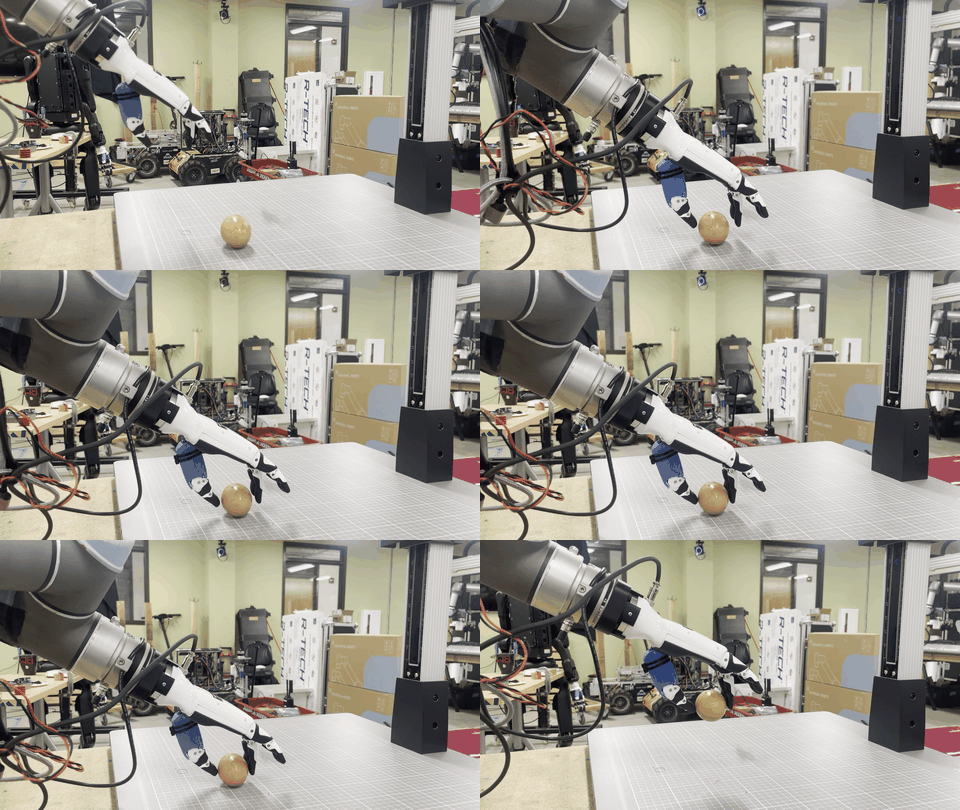 Egg
Egg
 Nut
Nut
 Paper Cup
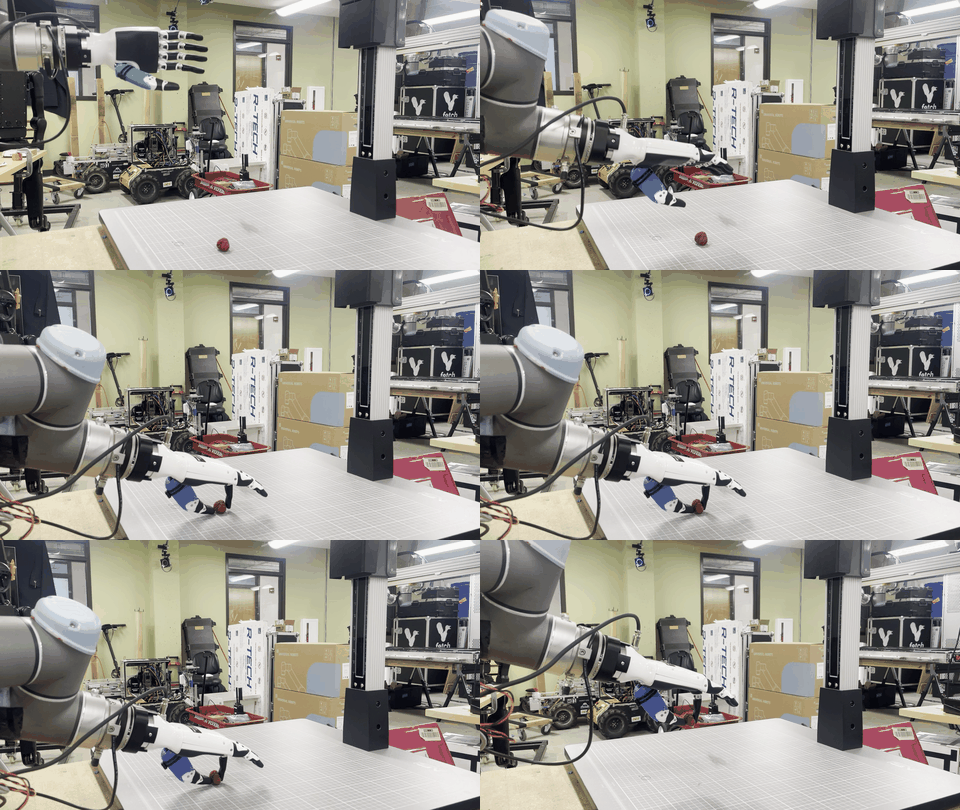 Raspberry
 Strawberry

Sim
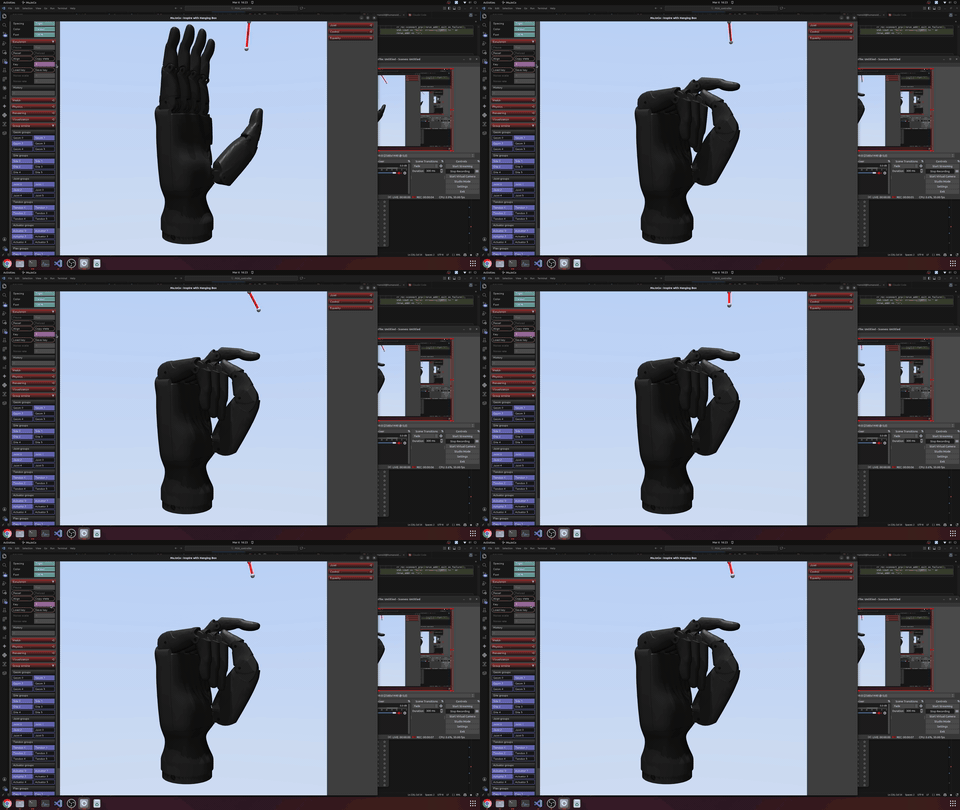
Real

Sim (with UR5)

Real (with UR5)

Grasp Quality Visualization


Finger Force Sensing
Wrist Force Sensing
The latest code is available on GitHub in the main branch of rh56_controller. The main branch is once again the primary branch for current development and installation.
Development on the Inspire RH56DFX hands is currently paused. Since late March 2026, we have been unable to read from the RX or TX pins on either hand, and we have not yet received sufficient vendor support to resolve the issue. Because of this hardware and support limitation, the official code release has been delayed.
At present, ROS2 support is available only for basic hand controls. The antipodal grasping and other higher-level control functionality remain implemented in native Python/Tkinter rather than ROS2.
@misc{tan2026characterizationanalyticalplanninghybrid,
            title={Characterization, Analytical Planning, and Hybrid Force Control for the Inspire RH56DFX Hand},
            author={Xuan Tan and William Xie and Nikolaus Correll},
            year={2026},
            eprint={2603.08988},
            archivePrefix={arXiv},
            primaryClass={cs.RO},
            url={https://arxiv.org/abs/2603.08988},
        }
The website template is adapted from Language to Rewards and ProgPrompt.